

Nature Based AgriEcosystem Restoration Research Group - MATE Research
Nature Based AgriEcosystem Restoration Research Group

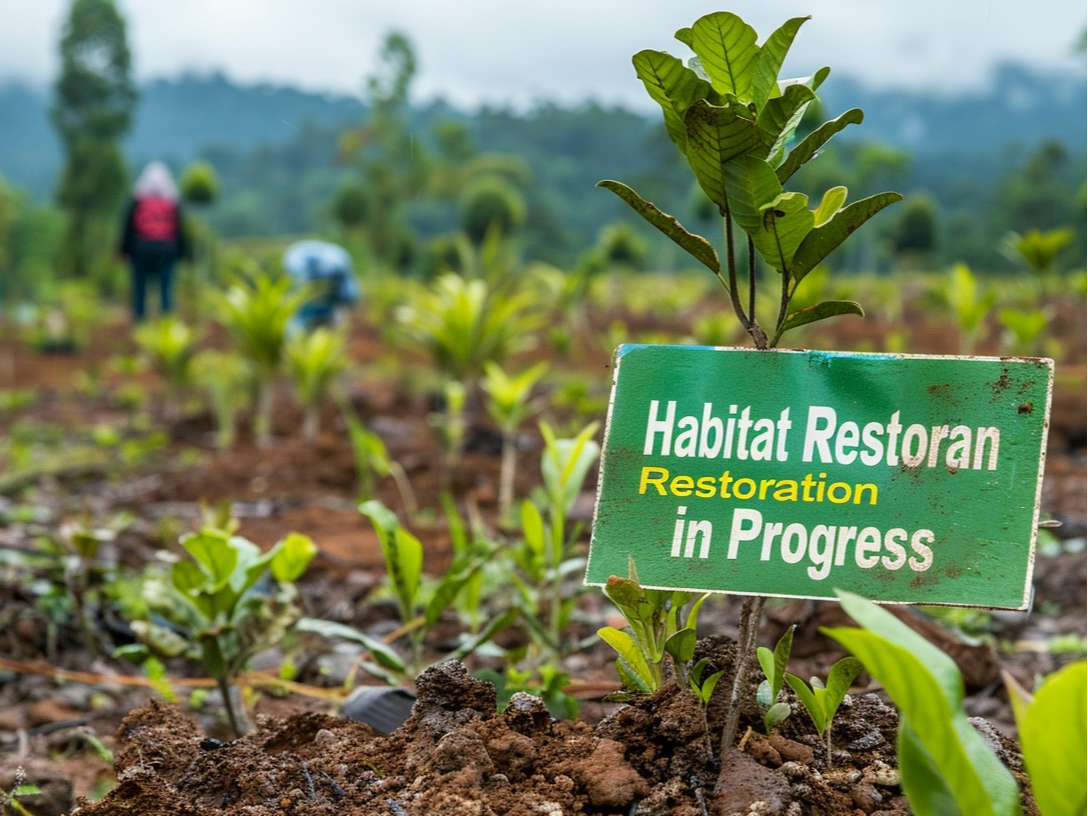
The “Tracking the progress on ecosystem restoration involving agriculture-related Nature Based Solutions” Research Group aims to advance knowledge in the field of biology and agriculture by focusing on a complex assessment of the effects of a relatively novel livestock management method, regenerative grazing. It pursues innovative studies of the effects of this method on soil biological and ecological parameters. We use an integrated, interdisciplinary approach to include zoologists, botanists, experts in animal husbandry, microbiology, soil science, statistics, and a foreign partner to assist in science communication.
The rise in human activities that degrade and pollute natural systems causes an unparalleled loss of biodiversity and ecosystem services. This loss ultimately affects food production and the livelihoods of large populations. Additionally, the changing conditions resulting from climate change necessitate a re-evaluation of current agricultural practices. The implementation of Nature-Based Solutions (NBS) can provide a sustainable and economic approach to combat biodiversity loss and land degradation, whilst also making significant contributions towards achieving sustainability and climate resilience. This project aims to explore the effects of regenerative grazing by local indigenous mixed herds on enhancing the biodiversity of the area, including plant, animal, and soil biology, while also taking production indicators into consideration. The project will make a valuable contribution to the advancement of knowledge on natural values enabling the creation of a set of good practices.
The project will enable us to emerge important generalizations across various disciplines/over several years. By addressing fundamental theoretical concepts of soil biology, ecology, botany, and parasitology, we will advance our understanding of the impacts of regenerative grazing/ we will significantly improve our ability to promote the practical use of our research findings.
Leader
 |
Dr. Miklós Sárospataki
Institute for Wildlife Management and Nature Conservation
Associate Professor
Research keywords: wild bee pollinators, pollinator-friendly agricultural practices, conservation biology, landscape effects
|
Members
 |
Dr. Julianna Bokor
Kaposvár Campus Services Ltd.
Research Fellow
Research keywords: red deer, pasture management, venison processing
|
 |
Sándor Csete
Institute for Wildlife Management and Nature Conservation
Assistant Lecturer
Research keywords: vegetation dynamics, succession, fine-scale vegetation patterns, autecology of rare plant species
|
 |
Dr. András Ittzés
Institute of Mathematics and Basic Science
Associate Professor
Research keywords: statistical software, multivariate statistical methods, applied statistics, design of experiments
|
 |
Dr. Ákos Juhász
Institute of Genetics and Biotechnology
Senior Research Fellow
Research keywords: antimicrobial effect, microbiota analysis, metagenomics, herbal extracts
|
 |
Dr. Lola Virág Kiss
Institute for Wildlife Management and Nature Conservation
Research Assistant
Research keywords: ecotoxicology, nanomaterials, microplastics
|
 |
Prof. Dr. Péter István Nagy
Institute for Wildlife Management and Nature Conservation
University Professor
Research keywords: ecotoxicology, environmental nematology, plant-parasitic nematodes, nematicide effects, soil fauna ecology
|
 |
Dr. Anikó Seres
Institute for Wildlife Management and Nature Conservation
Associate Professor
Research keywords: ecotoxicology, soil ecology, decomposition, mesofauna, zoology
|
Selected publications resulted from the project
Bakonyi, G., & Seres, A. (2025). Sex on the beach: Sexual size dimorphism among aquatic bugs (Nepomorpha) inhabiting different habitats. Ecology and Evolution, 15(6). https://doi.org/10.1002/ece3.71501 (Q1)
Bartha, S., Házi, J., Purger, D., Zimmermann, Z., Szabó, G., Guller, Z. E., Csathó, A. I., & Csete, S. (2025). Fine-scale organization and dynamics of matrix-forming species in primary and secondary grasslands. Land, 14, 1736. https://doi.org/10.3390/land14091736 (Q1),
Bartha, S., Házi, J., Purger, D., Zimmermann, Z., Szabó, G., Guller, Z. E., Csathó, A. I., & Csete, S. (2025). Fine-scale spatiotemporal variability of plant species composition in old-field succession: The cycling heterogeneity hypothesis revisited. Land, 14, 2381. https://doi.org/10.3390/land1412238 (Q1),
Bihaly Á.D., Stephenson D.L., Józan Z., Somay L., Báldi A., Kovács-Hostyánszki A., Sárospataki M., Török E. (2026) A standardised protocol for sampling cavity-nesting Hymenoptera using trap nests. Journal of Hymenoptera Research https://doi.org/10.3897/jhr.@@.183051 (Q1),
Guller, Z. E., Molnár, C., Házi, J., Purger, D., Csete, S., Szabó, G., Zimmermann, Z., Tölgyesi, C., Bartha, S., & Csathó, A. I. (2026). What helps in the short term may hinder later: High grass abundance caused by the sowing of a competitive grass species limits meadow steppic grassland regeneration. Global Ecology and Conservation, 66, e04110. https://doi.org/10.1016/j.gecco.2026.e04110 (Q1),
Kiss, L. V., Baranyi, D. K., Ittzés, A., Seres, A., & Nagy, P. I. (2025). Nano zinc-oxide toxicity varies by age and sex in Panagrellus redivivus. Environmental Toxicology, 0:1–13. https://doi.org/10.1002/tox.24544 (Q2),
Mkuzi, H. T., Fuchs, M., Ocansey, C. M., Gulyás, M., Sebők, A., Takács, A., Döbröntey, R. E., Dálnoki, B. A., Chiro, L. T., & Boros, N. (2026). Regeneration dynamics and diversity patterns across disturbance gradients in Kaya Kauma Forest, coastal Kenya. Trees, Forests and People, e101262. https://doi.org/10.1016/j.tfp.2026.101262 (Q1),
Mkuzi, H. T., Ocansey, C. M., Maghanga, J., Gulyás, M., Penksza, K., Szentes, S., Michéli, E., Fuchs, M., & Boros, N. (2025). A review of biomass estimation methods for forest ecosystems in Kenya: Techniques, challenges, and future perspectives. Land, 14, 1873. https://doi.org/10.3390/land14091873 (Q1),
Seres, A., Kiss, L. V., Nagy, P. I., & Posta, K. (2025). Arbuscular mycorrhiza alters maize zinc uptake differentially from nano- vs. bulk-ZnO particles. Plant Nano Biology, 14, 100212. https://doi.org/10.1016/j.plana.2025.100212 (D1),
Süle, G., Báldi, A., Kleijn, D., Steffan-Dewenter, I., Venn, S., Goulson, D., Dietzel, S., Muratet, A., Cole, L. J., Öckinger, E., Tzortzakaki, O., Banaszak-Cibicka, W., Betz, O., Blackmore, L. M., Dylewski, Ł., Fontaine, B., Fournier, B., Geppert, C., Griffiths-Lee, J., Hawthorn, C., Holzschuh, A., Horák, J., Horstmann, S., Hoyle, H., Kati, V., Kovács-Hostyánszki, A., Marini, L., Michelot-Antalik, A., Moretti, M., Norton, B. A., Phillips, B. B., Plećaš, M., Rada, P., Sárospataki, M., Schulze, S., Shwartz, A., Unterweger, P., & Szigeti, V. (2025). Pollinator-promoting interventions in European urban habitats: A synthesis. Ecology Letters, 28, e70189. https://doi.org/10.1111/ele.70189 (D1, IF: 7.9),
Zalai, M., Bujtás, O., Sárospataki, M., & Dorner, Z. (2025). Grassy and herbaceous interrow cover crops in European vineyards: A review of their short-term effects on water management and regulating ecosystem services. Land, 14, 1526. https://doi.org/10.3390/land14081526 (Q1, IF: 3.2),
Dénes, E. ; Kiss, L. V.; Nagy, P.I.; Seres, A. (2025) A féreghajtószerként használt ivermektin hatása a talajban élő nem célszervezet ászkarákok (Porcellio scaber) táplálkozási aktivitására és növekedésére Állattani Közlemények 110: 1-2. https://m2.mtmt.hu/api/publication/36342246