

Regeneraitve Agricultural Technologies Research Group - MATE Research
Regenerative Agricultural Technologies Research Group

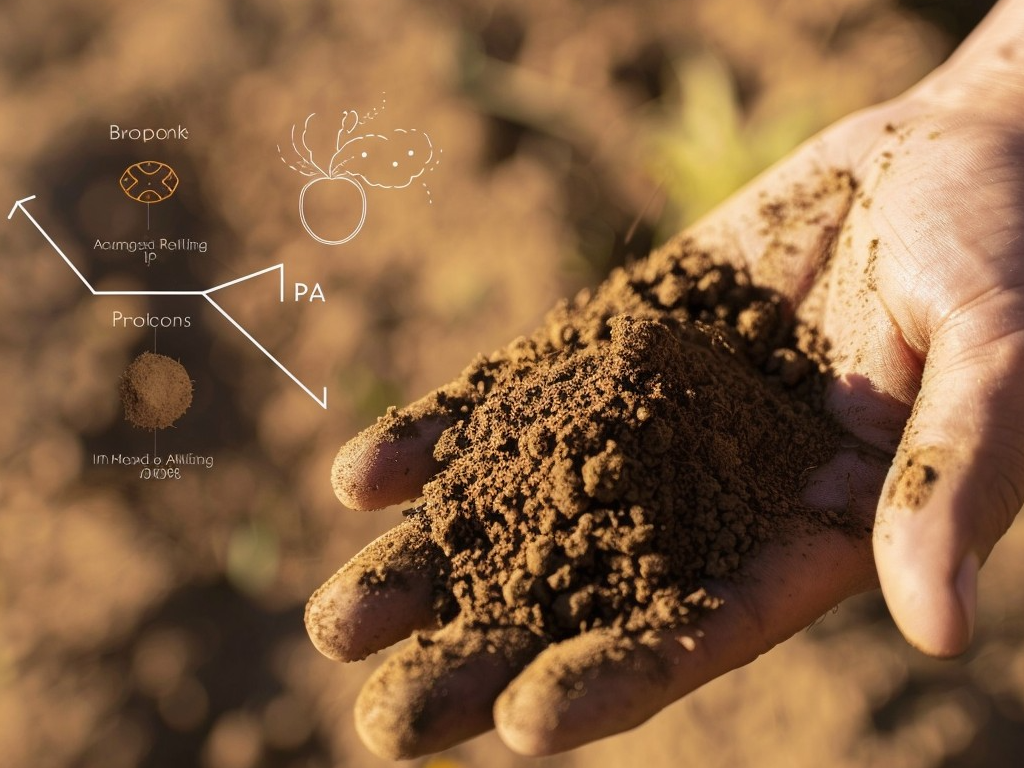
The “Regenerative Agricultural Technologies” Research Group aims to advance knowledge in the field of soil management by “Evaluating Regenerative Agricultural Technologies as an alternative for adaption to changing climate and economy” It pursues innovative studies of the reduced, non inversion and even zero tillage technologies combined with cover crop production. We use an integrated, interdisciplinary approach to identify changes in physical, chemical and biological soil properties as well as to monitor climatic conditions within the crop and soil with regard to the efficiency of natural water resources.
In the last century, agricultural industrialisation has primarily aimed to increase productivity through chemical inputs and larger machinery. The progress in breeding and farm practices geared towards that ideal. This has come at an environmental cost that is no longer acceptable. As a consequence soil degradation became extensive, biodiversity, ecosystem service and resilience of soil got purer. In the research project the effect of Regenerative Agricultural technologies applying reduced or zero tillage while providing longer mulch cover and more living root systems in the soil due to cover crop production will be evaluated. During the research soil physical, chemical and biological properties will be evaluated as well as water regime and climate within the field. Productivity, physiological status (abiotic stress level) and yield quality will also be analysed and compared to conventionally managed fields. In addition the phytosanitary status will also be estimated. Based on the multidisciplinary approach, a complex compehensive research program providing many useful results can be achieved.
The project will enable us to emerge important generalizations across soil functions, ecosystem services, fertility, productivity and yield quality. By addressing fundamental theoretical concepts of productivity and conservation, we will advance our understanding of limitations and opportunities of different soil management strategies and we will significantly improve our ability to influence agricultural policy to respond properly to climatic, ecological and economical challenges.
Leader
 |
Dr. Zoltán Tóth
Institute of Agronomy
Associate Professor
Research keywords: regenerative agriculture, soil restoration, carbon sequestration, ecosystem service, resilience
|
Members
 |
Dr. Kincső Decsi
Institute of Agronomy
Associate Professor
Research keywords: plant physiology, molecular genetics, abiotical and biotical stress factors, secondary biochemical pathways, biostimulants, nanoparticles
|
 |
Prof. Dr. Sándor Keszthelyi
Institute of Agronomy
University Professor
Research keywords: plant protection, arthropod pest of arable plant, chemical protection, ipm, pest identification, plant physiological stress
|
 |
Dr. Szabina Simon
Institute of Agronomy
Assistant Lecturer
Research keywords: remote sensing, agriculture, leaf litter decomposition, lake balaton, unmanned aerial vehicles
|
 |
Dr. Katalin Somfalvi-Tóth
Institute of Agronomy
Assistant Professor
Research keywords: modelling, agrometeorology, climatology, crop production, stress analysis
|
Selected publications resulted from the project
Ahmed, M., Tóth, Z., Rizk, R., Nasir, M. W., & Decsi, K. (2025). Ecofriendly Application of Synthetic Zinc Oxide Nanoparticles as Stress Regulator Bio-Fertilizer for Zea mays. AGRONOMY (BASEL), 15(12). http://doi.org/10.3390/agronomy15122875
Decsi, K., Ahmed, M., Abdul-Hamid, D., & Tóth, Z. (2025). The Role of Salicylic Acid in Activating Plant Stress Responses—Results of the Past Decade and Future Perspectives. INTERNATIONAL JOURNAL OF MOLECULAR SCIENCES, 26(9). http://doi.org/10.3390/ijms26094447
Decsi, K., Ahmed, M., Abdul-Hamid, D., Rizk, R., & Tóth, Z. (2025). Verification of Seed-Priming-Induced Stress Memory by Genome-Wide Transcriptomic Analysis in Wheat (Triticum aestivum L.). AGRONOMY (BASEL), 15(6). http://doi.org/10.3390/agronomy15061365
Decsi, K., Ahmed, M., Rizk, R., Abdul-Hamid, D., & Tóth, Z. (2025). Transcriptome datasets of wheat plant cultures treated with seed priming fertilizer. DATA IN BRIEF, 62. http://doi.org/10.1016/j.dib.2025.112050
Decsi, K., Ahmed, M., & Tóth, Z. (2025). Genome-Wide Transcriptional Analysis Reveals Gamma-Aminobutyric Acid (GABA) Priming Induces Long-Term Stress Memory in Tomato (Solanum lycopersicum). AGRICULTURE-BASEL, 15(19). http://doi.org/10.3390/agriculture15192012
Keszthelyi, S., Tóth, Z., & Balog, A. (2025). A tillage-dependent system of arable pests : how soil condition and prevailing climate influence pest occurrence? AGRONOMY (BASEL), 15(6). http://doi.org/10.3390/agronomy15061454
Ahmed, M., Tóth, Z., Marrez, D. A., Rizk, R., Abdul-Hamid, D., & Decsi, K. (2025). Transcriptome datasets of salt-stressed tomato plants treated with zinc oxide nanoparticles. DATA IN BRIEF, 58. http://doi.org/10.1016/j.dib.2025.111282
Ahmed, M., Abd-El Fatah, S. I., Shaker, A. S., Tóth, Z., & Decsi, K. (2026). The Role of Zinc Oxide Nanoparticles in Boosting Tomato Leaf Quality and Antimicrobial Potency. OXYGEN, 6(1). http://doi.org/10.3390/oxygen6010002
Gibicsár, S., Donkó, T., Csóka, Á., Kovács, A., Orsi, G., & Keszthelyi, S. (2026). Detection of Hidden Volumetric Changes Caused by the Southern Green Stink Bug, Nezara viridula, on Soybean Pods Using Micro‐CT Imaging. LEGUME SCIENCE, 8(1). http://doi.org/10.1002/leg3.70092
Gerbovits, B., Agyarko, E., Ali, O., Szabó, A., & Keszthelyi, S. (2026). Impairment Analytical Evaluation on Oilseed Rape Seeds Triggered by Pollen Beetle (Brassicogethes aeneus Fabricius, 1775) Especially Regarding the Fatty Acid Composition. SEEDS, 5(1). http://doi.org/10.3390/seeds5010011
Keszthelyi, S., Gerbovits, B., Donkó, T., Csóka, Á., Balog, A., & Jócsák, I. (2025). The massification of an atypical field symptom: damaged oilseed rape caused by Aulacobaris coerulescens (Col.: Curculionidae) using computed tomography approaches. JOURNAL OF PLANT DISEASES AND PROTECTION, 132(6). http://doi.org/10.1007/s41348-025-01168-0
Sipos, T., Kolics, B., Kolics-Horváth, É., Donkó, T., Csóka, Á., Kozma-Bognár, K., … Keszthelyi, S. (2025). Comparative morphological analysis of yellow-legged hornet (Vespa velutina nigrithorax) and European hornet (Vespa crabro) based on modern imaging techniques. FRONTIERS IN ECOLOGY AND EVOLUTION, 13. http://doi.org/10.3389/fevo.2025.1624744
Knolmajer, B., Jócsák, I., Taller, J., Keszthelyi, S., & Kazinczi, G. (2025). Common Ragweed—Ambrosia artemisiifolia L.: A Review with Special Regards to the Latest Results in Protection Methods, Herbicide Resistance, New Tools and Methods. AGRONOMY (BASEL), 15(8). http://doi.org/10.3390/agronomy15081765