

Microbiome-Driven Applications for Sustainable Food Systems Research Group - MATE Research
Microbiome-Driven Applications for Sustainable Food Systems Research Group

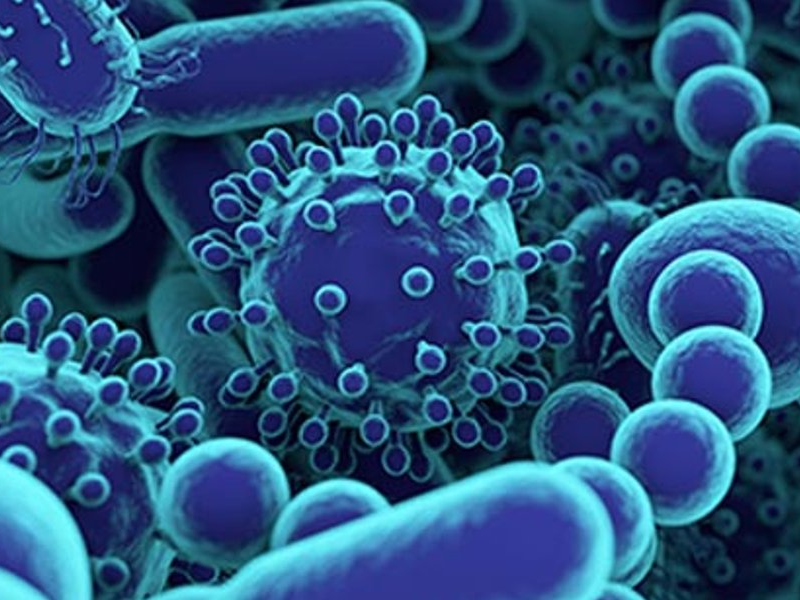
The Research Group aims to advance knowledge in the field of sustainable and healthy food by studying and applying the microbiome. It pursues innovative studies of the role of the microbiome in the valorization of food waste. We use an integrated, interdisciplinary approach to explore the role of microorganism consortia in food by their effect on nutrition, safety and product development to establish data-driven food production systems.
Microorganisms are essential in food technologies as they convert complex natural substrates into high nutritional and bioactive compounds. However, the pathogen ones cause serious issues in the aspect of food safety. The role of microorganisms in the quality, safety, and specifications of fermented food is crucial. The main goal of this project is unravelling the application potential of microbiomes in food production systems for more sustainable and healthier foods as well as in the valorisation of food wastes. The project also aims to provide end-users with public food microbiome data, and to better understand interactions between fermented foods, nutritional values, microbial functionalities, and data-driven food production systems. Ultimately, the project will strengthen the food sector by demonstrating the economic viability of different value chains, while reducing pressure on natural resources, and minimizing environmental impact.
The project will enable us to emerge important generalizations across the microbiome application in food systems. By addressing fundamental theoretical concepts of food microbiome, we will advance our understanding of the complexity and role of the microbial consortium in the development of healthy and sustainable food.
Leader
 |
Prof. Dr. Quang D. Nguyen
Institute of Food Science and Technology
University Professor
Research keywords: nutrition, applied biotechnology, microbiome, functional foods, biorefinery
|
Members
 |
Dr. Ágnes Belák
Institute of Food Science and Technology
Associate Professor
Research keywords: food microbiota, dna-based methods, pathogenic bacteria
|
 |
Dr. Erika Bujna
Institute of Food Science and Technology
Associate Professor
Research keywords: fermented food, probiotics, enzyme fermentation, bioconversion, food biotechnology
|
 |
Dr. Karina Hidas
Institute of Food Science and Technology
Assistant Professor
Research keywords: preservation technologies, technofunctional properties, rheological measurements, differential scanning calorimetry
|
 |
Dr. Gábor Jónás
Institute of Food Science and Technology
Associate Professor
Research keywords: meat technology, ultrasound, high hydrostatic pressure, salt, diffusion
|
 |
Prof. Dr. Melinda Kovács
Institute of Animal Physiology and Nutrition
University Professor
Research keywords: mycotoxins, feed and food safety, production physiology, one health
|
 |
Prof. Dr. Katalin Posta
Institute of Genetics and Biotechnology
University Professor
Research keywords: arbuscular mycorrhizal fungi, soil microbiome, plant-microbe interactions, sustainable agriculture
|
 |
Dr. Zsolt Zalán
Institute of Food Science and Technology
Senior Research Fellow
Research keywords: lactic acid bacteria, fermentation, food development, biotechnology, detoxification
|
Selected publications resulted from the project
Ha, N. T. T., Mac, H. X., Pham, T. T., Le Phuong Nguyen, L., Baranyai, L., Friedrich, L. F., Tóth, A., Németh, C., & Nguyen, Q. D. (2025). Rapid assessment of egg freshness by handheld NIR spectrometer coupled with Random Forest algorithm. Progress in Agricultural Engineering Sciences, 21(1), 377-391. https://doi.org/10.1556/446.2025.00220 Q2
Sipiczki, G., Mosonyi, S., Bartha, Á. A., Brezovcsik, G., Nguyen, Q. D., & Bujna, E. (2025). Optimization of fermentation conditions for enhancement of lipase production by Yarrowia isolates. Progress in Agricultural Engineering Sciences, 21(1), 253-268. https://doi.org/10.1556/446.2025.00244 Q2
Dobó, V., Wagner, E., Belák, Á., Peham, T., & Domig, K. J. (2025). Deciphering the microbial composition of dried fruits purchased from Austrian and Hungarian markets using culture-dependent and culture-independent methods. Food Control, 111845. https://doi.org/10.1016/j.foodcont.2025.111845 D1
Kovács, M., Pomázi, A., Taczman-Brückner, A., Kiskó, G., Dobó, V., Kocsis, T., Mohácsi-Farkas, C., & Belák, Á. (2025). Detection and Identification of Food-Borne Yeasts: An Overview of the Relevant Methods and Their Evolution. Microorganisms, 13(5), 981. https://doi.org/10.3390/microorganisms13050981 Q1
Wang, S., Zhou, S., Tang, K., Wu, Y., Zsolt, Z., Ibrahim, A., … Du, M. (2026). Comprehensive analysis of characteristic flavor compounds and microbial community composition in Xinjiang Kazak cheese. FOOD AND FERMENTATION INDUSTRIES, 52(4), 143–152. http://doi.org/10.13995/j.cnki.11-1802/ts.042552 Q4
Gong, R., Zalán, Z., Song, J., & Suo, H. (2025). Microbial fermentation of soybeans: synergistic enhancement of bioactivity and sensory properties. FOOD CHEMISTRY: X, 30. http://doi.org/10.1016/j.fochx.2025.102924 D1